BLOG
How do manufacturers reduce downtime and get more from existing equipment?

New capacity is expensive to build and expensive to staff. With manufacturing moving back onshore and labor and material costs competing for the same budget, the projects getting funded right now are the ones that raise output from machinery that is already paid for. Here are the six that come up most often in the work we do at Very Technology.
1. Instrument the machines you already have
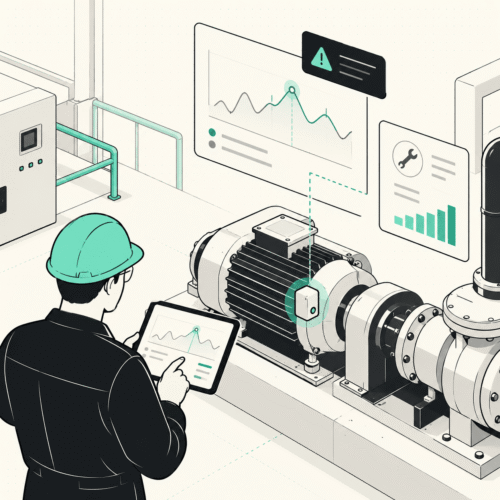
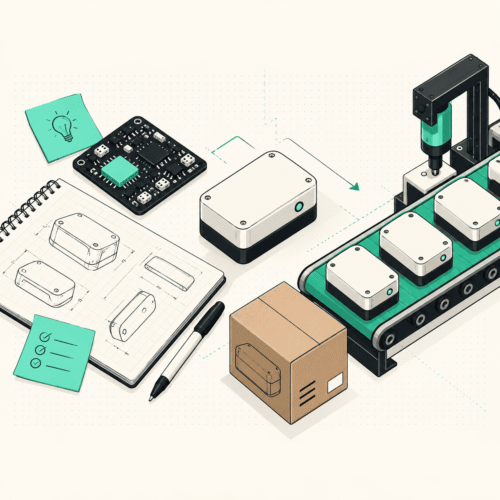
Most equipment on a factory floor was built without connectivity and has years of productive life left. Rather than replacing it, you can instrument it externally with customizable sensor systems that report what the machine is actually doing.
This is usually the first phase of an industrial program, because everything else depends on it. You cannot improve throughput you cannot measure, and you cannot predict a failure you have no history of.
2. Move from scheduled maintenance to predictive
Scheduled maintenance either happens too early, which wastes parts and uptime, or too late, which is the expensive one.
Predictive maintenance replaces the calendar with the machine’s own signals. It needs three things: sensor data from the equipment, enough history for patterns to become visible, and a model tuned to the failure modes that actually matter on your line. The sensing layer has to come first, because the history has to exist before anything can be predicted from it.
3. Put processing close to the line
Some decisions cannot wait for a round trip to the cloud. Local gateways and edge processing handle the data next to the machine, which matters when a response has to happen in real time or when the line has to keep running through a connectivity drop.
Analysis that looks across weeks of history belongs where the history lives. Most industrial programs end up using both, and deciding which work runs where is an architecture question worth answering early.
4. Build the history, not just the dashboard
A dashboard tells you what is happening now. A data lake tells you what has been happening for eighteen months, which is where the patterns are.
This is the layer that gets skipped most often, and skipping it caps what the rest of the system can ever do. Predictive models, yield analysis, and any question that starts with “has this gotten worse” all depend on history that somebody decided to keep.

5. Close the gap between the floor and the executive team
The people running the equipment every day usually know where it struggles. The executives making capital decisions often cannot see it, through no fault of their own, because they are not on the floor.
Data closes that gap. It carries what the operators already know upward in a form that supports a funding decision, which changes both which investments get made and how quickly they get approved. It is a quieter return than predictive maintenance, and sometimes a larger one.
6. Start with your most expensive problem
The question we open with at Very is deliberately narrow: what are your most expensive problems right now?
That keeps the first phase pointed at something with a real number attached, which makes the result easy to evaluate and the next phase easy to fund. Broad instrumentation programs with no specific target are much harder to justify a second time.
Common questions
Does this work on older equipment?
Often yes. Machinery without native connectivity can be instrumented externally, which is a common path for lines that have years of productive life left and no path to replacement.
How long before any of this shows a return?
The visibility return arrives first, usually within the first phase, because seeing the operation clearly changes decisions immediately. Predictive maintenance takes longer, since it needs enough history to find the patterns.
Where should processing happen, on site or in the cloud?
It depends on what the data is for. Real-time decisions on the line belong close to the machine. Analysis across weeks of history belongs where the history lives. Most programs use both.
If you are looking at getting more out of the equipment you already run, we can help you find where the measurable return is. Start a conversation